
Piretti Golf – Redesign and CMS Migration
A multi-phase website transformation spanning a strategic redesign, a targeted SEO campaign, and a precision-led WordPress to Shopify migration. Originally hindered by structural SEO gaps and unclear conversion pathways, the platform was improved to preserve search equity and user familiarity while modernizing infrastructure, strengthening authority signals, and enabling scalable ecommerce growth.

CLIENT
Piretti Golf
CATEGORY
Premium Golf / Ecommerce
SCOPE
Strategic redesign, targeted SEO campaign, WordPress to Shopify migration
STATUS
Live
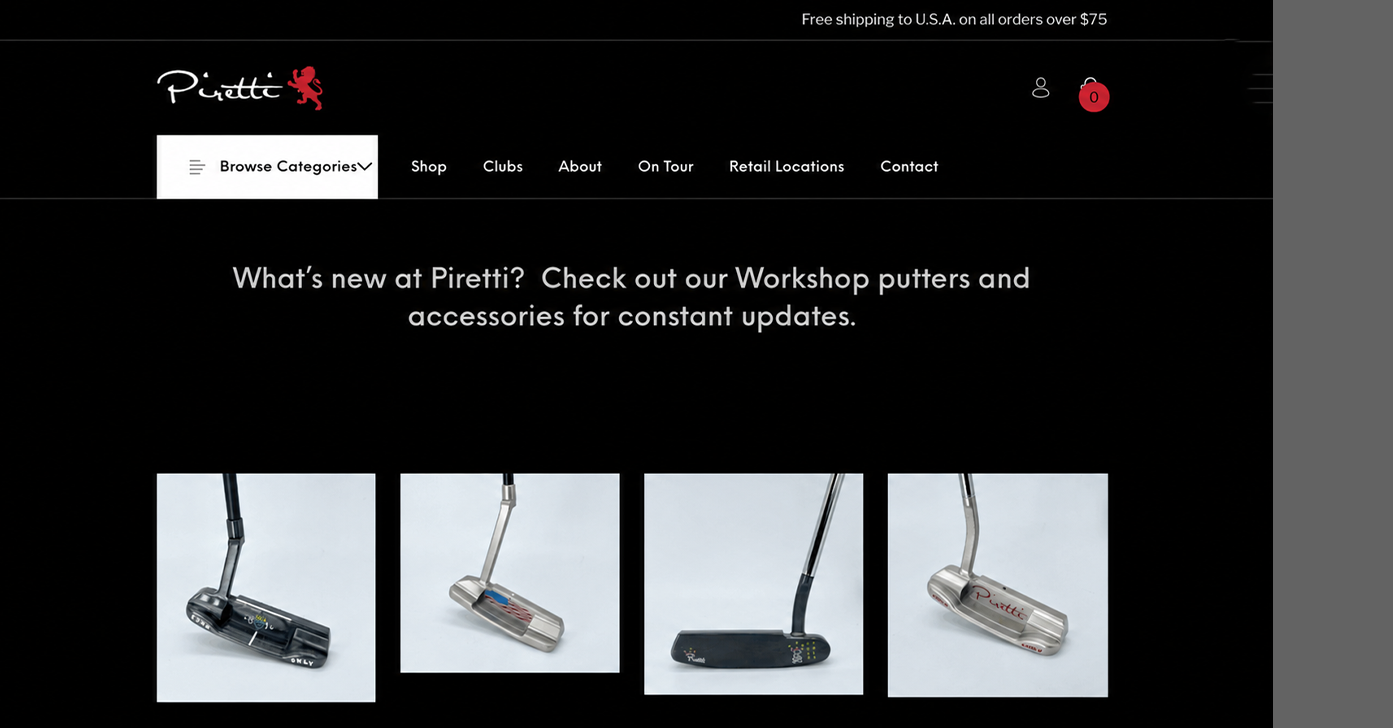
Home Page Before 1st Redesign
Navigation-led layout without strategic hierarchy
This version of the homepage revealed three core structural gaps:
1. Menu-Led Entry Point (No Primary Hero Structure)
Navigation was the first visual priority, not a defined hero structure, headline or value proposition. Without a clear H1 or brand framing, both users and search engines lacked immediate context around what Piretti Golf represents.
2. Generic Intro Copy Without Strategic Positioning
“What’s new at Piretti?” read as an update rather than a brand statement. It did not reinforce authority, category ownership, or high-value keyword themes.
3. Product Grid Without Contextual Framing
The page moved directly into product imagery without segmentation, structured internal linking, or guided CTAs. Visually strong, but functioning as a gallery rather than a discovery funnel.
Strategic Impact
The homepage lacked hierarchy, defined intent, and conversion scaffolding. Search signals were limited, internal equity was diluted, and first-time visitors were not guided into a clear brand journey.
Strong visuals – but limited structural authority and performance leverage.
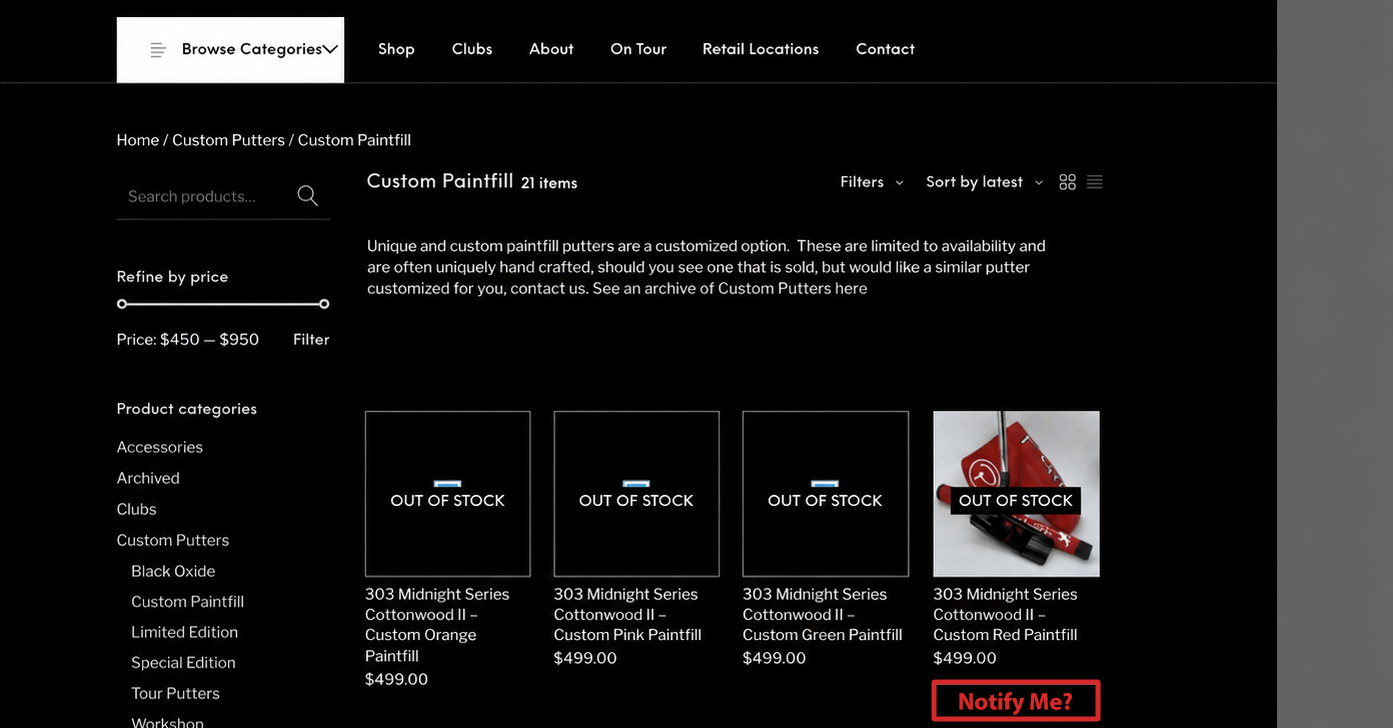
Category Page Before 1st Redesign
High-Intent Category Undermined by Stock and Recovery Gaps
This category page revealed three structural weaknesses affecting both SEO value and conversion flow:
1. Minimal Context Above the Fold
While a short description existed, it lacked depth, keyword framing, and internal linking support. The page did not fully establish category authority or reinforce high-intent search relevance for “Custom Paintfill” variations.
2. Out-of-Stock Dominance in Primary Grid
The majority of visible products were sold out, immediately signaling limited availability. High-intent users arriving from search were met with dead-end inventory rather than active purchase opportunities.
3. No Clear Recovery Path (“Notify Me” Opportunity)
Out-of-stock items lacked a strong recovery mechanism such as waitlist, back-in-stock notification, or guided alternatives. Without a defined next step, users were forced to exit or manually navigate elsewhere.
Strategic Impact
The page captured high-value search traffic but failed to convert or redirect intent. Limited contextual authority, stock friction, and absent recovery CTAs reduced both SEO leverage and revenue opportunity.
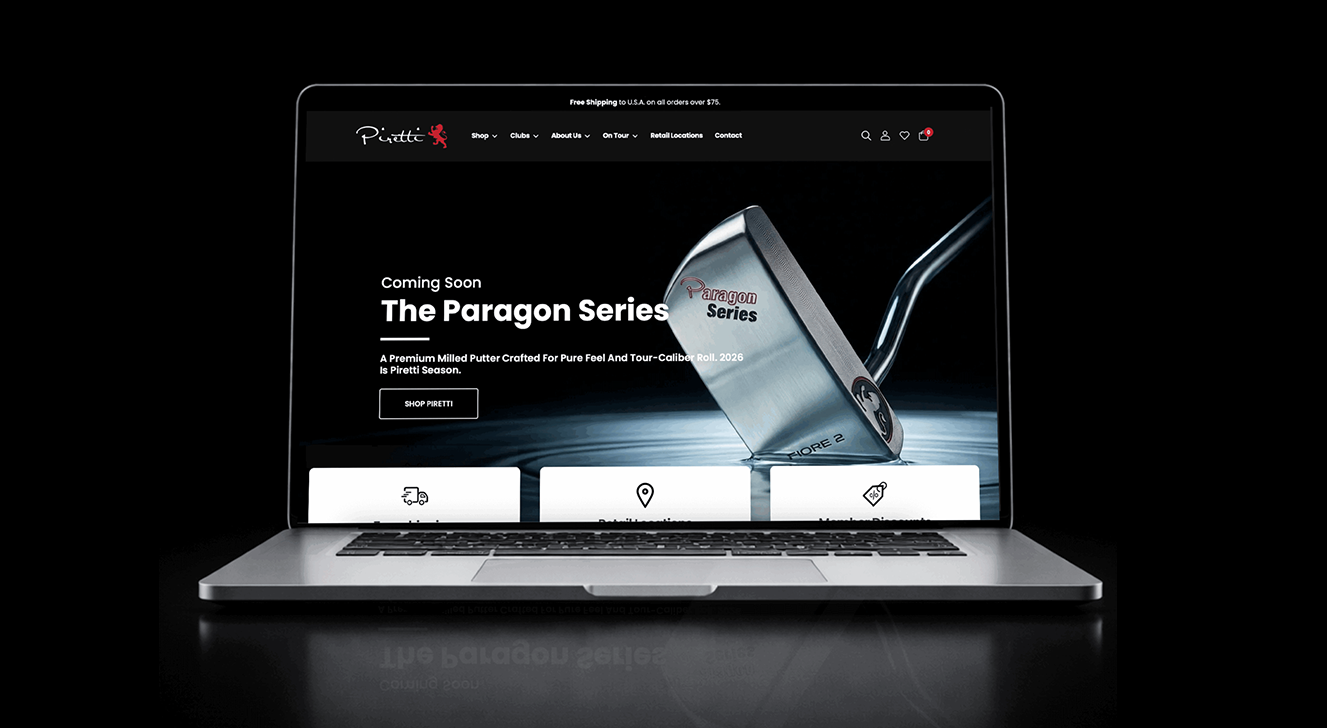
Homepage After Redesign
Structured authority and conversion clarity above the fold
The redesign introduced three core structural upgrades:
1. Clear Hero & H1 Hierarchy
The homepage now opens with a strong, brand-led H1 supported by structured subheading copy, immediately establishing category authority, keyword relevance, and positioning for both users and search engines.
2. Defined Brand Entry Point
Rather than defaulting to products, the above-the-fold experience communicates brand identity first. Piretti is framed as a premium performance brand before guiding users into collections, reinforcing value and intent alignment.
3. Conversion-Led Primary CTA Placement
A visible “Shop Now” CTA is embedded within the hero structure, creating a deliberate next step instead of relying on passive browsing.
Strategic Impact
This restructuring shifts the homepage from a visual gallery to a structured authority hub. Semantic hierarchy improves search clarity, brand messaging strengthens first-touch perception, and user intent is directed from the initial interaction.
The result: elevated brand presence supported by measurable performance structure.
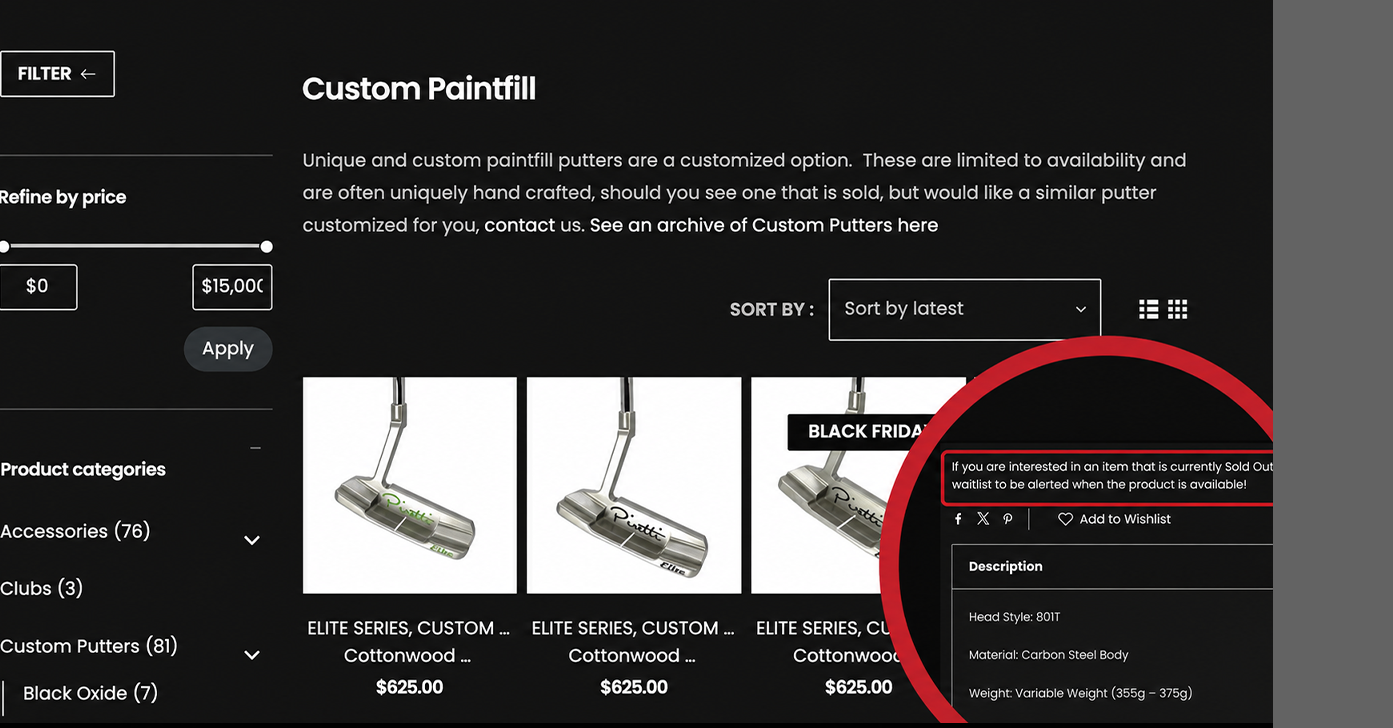
Category Page After Redesign
Structured for search intent, inventory clarity, and conversion continuity
The redesign resolved three foundational structural gaps:
1. Simplified Navigation & Taxonomy Structure
Navigation and category depth were streamlined to improve crawl clarity and concentrate internal link equity. The hierarchy now clearly signals priority pages to both users and search engines.
2. Contextual Category Framing
Each category incorporates structured, keyword-aligned descriptive copy that reinforces intent, expands semantic coverage, and strengthens authority around high-value queries such as custom putters and custom paintfill.
3. Inventory-Aware Conversion Path
Out-of-stock products no longer create dead ends. Recovery mechanisms including waitlist, wishlist, or inquiry options preserve purchase intent and reduce high-intent drop-off.
Strategic Impact
The category experience evolved from a static product grid into an intent-driven landing environment. Stronger content structure, refined taxonomy, and preserved conversion pathways improved SEO performance while protecting revenue opportunity.
The result: a category system built for visibility, continuity, and sustained growth.
Search Performance & Limited SEO Campaign Impact
Focused SEO campaign within the existing WordPress environment
Prior to the planned platform transition, we executed a focused SEO campaign within the existing WordPress environment to strengthen technical structure, clarify page intent, and expand keyword coverage.
Search visibility increased significantly, with impressions rising 46.6% from 236K to 346K, reflecting improved indexation and stronger alignment with high-intent queries. Average rankings improved from 26.3 to 13.9, moving key pages substantially closer to page one and reinforcing domain authority. Click volume remained stable at 15.8K to 15.9K as reach expanded, while the CTR shift from 6.7% to 4.6% reflects broader exposure across more competitive SERPs rather than performance decline.
These results established a stronger organic foundation ahead of the Shopify migration detailed in the following section.
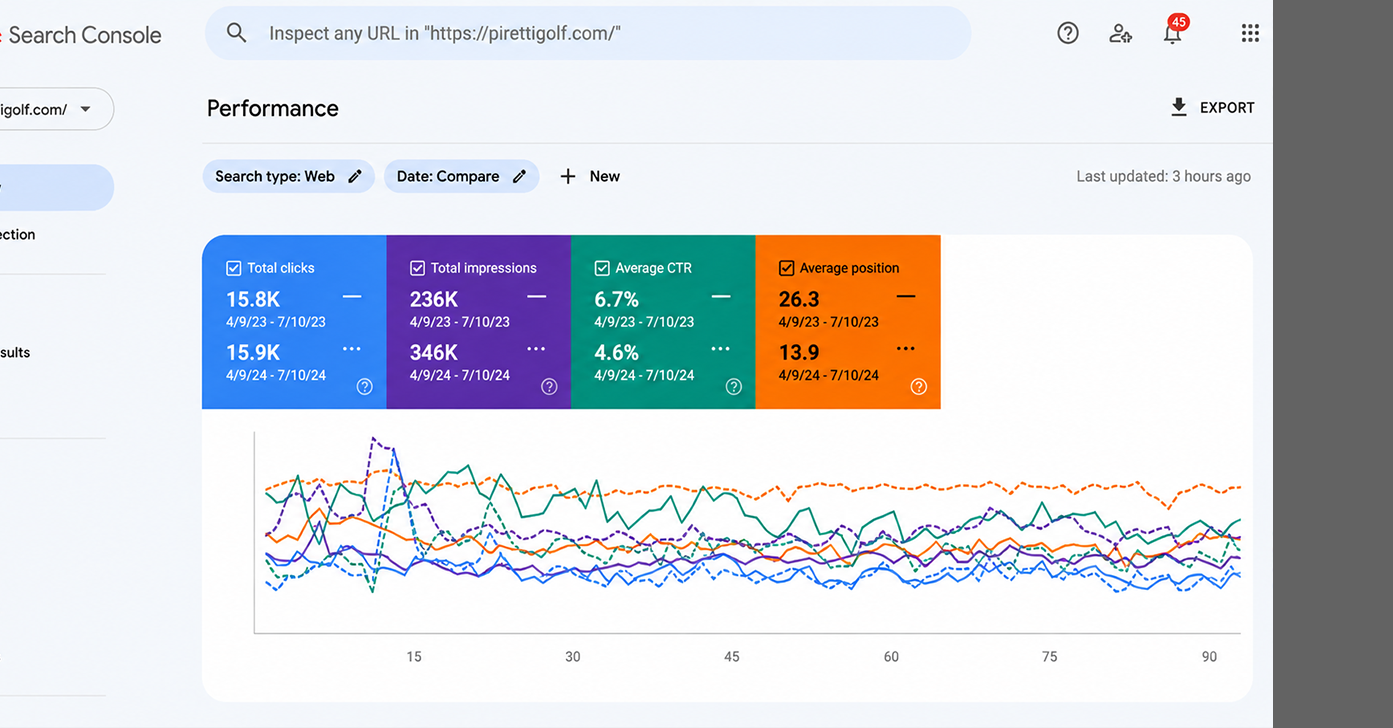
236K to 346K
Impressions
46.6% increase
26.3 to 13.9
Average Rankings
Key pages moved substantially closer to page one
15.8K to 15.9K
Click Volume
Stable click volume as reach expanded
6.7% to 4.6%
CTR Shift
Broader exposure across more competitive SERPs
Ecommerce Migration
Large-scale WordPress to Shopify migration with 400+ product pages
After the redesign and SEO foundation were established, the next phase focused on a large-scale ecommerce migration from WordPress to Shopify. Though the migration included homepage refinements and layout adjustments, this was not a full design reset. The goal was to move the site onto a more scalable ecommerce platform while preserving the structure, user familiarity, and search foundation already built through the earlier redesign and SEO work.
The migration included more than 400 product pages, requiring careful attention to product structure, URL continuity, metadata, internal linking, category logic, and ecommerce management. The Shopify rebuild needed to modernize the platform without weakening the visibility, ranking momentum, or buying pathways already in place.
The Shopify site was rebuilt with a custom Shopify implementation designed to mirror the proven structure and layout of the original WordPress experience, rather than treating the migration as a redesign reset. The build preserved the hierarchy, navigation logic, product pathways, and user familiarity already established, while giving the client a more scalable ecommerce platform and stronger control over a catalog of 400+ product pages.
The ecommerce foundation moved from WordPress to Shopify while preserving the strategic structure established in the earlier redesign and SEO phase.
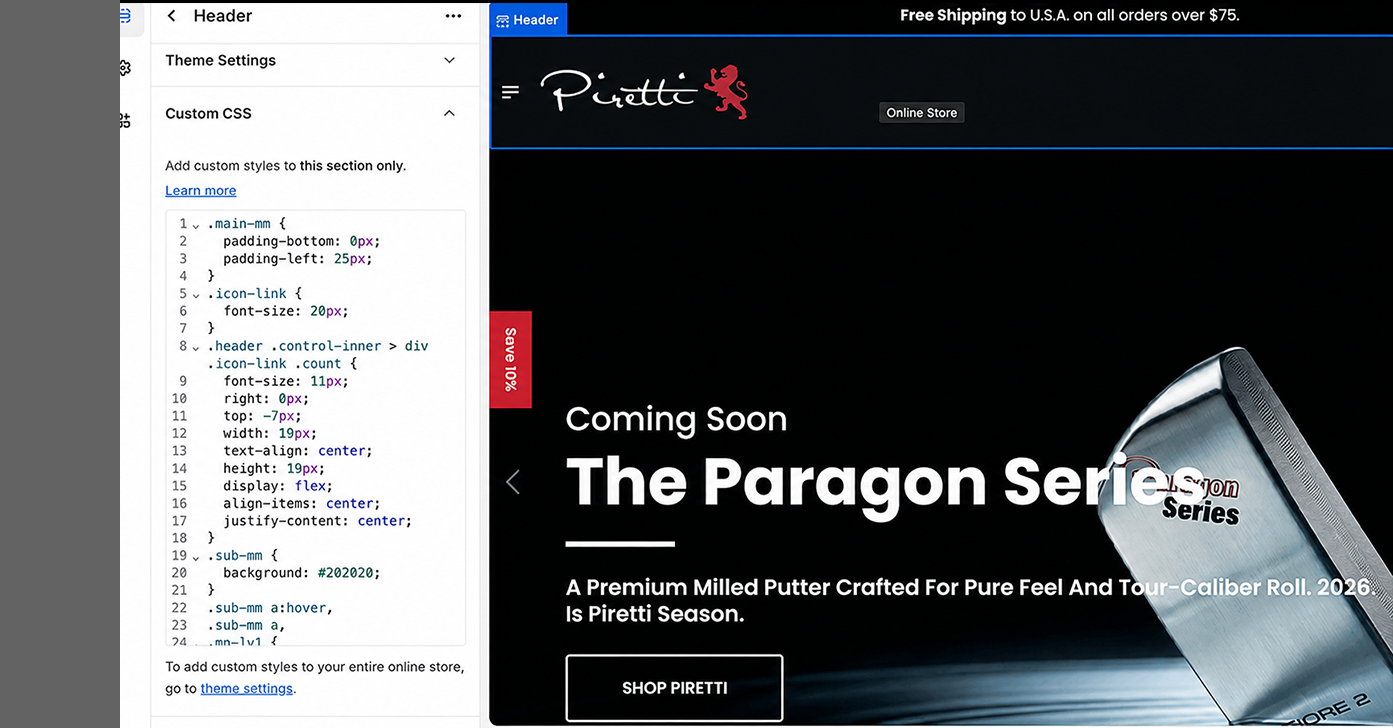
The Shopify build environment supported the native rebuild of the proven layout, hierarchy, and ecommerce structure.
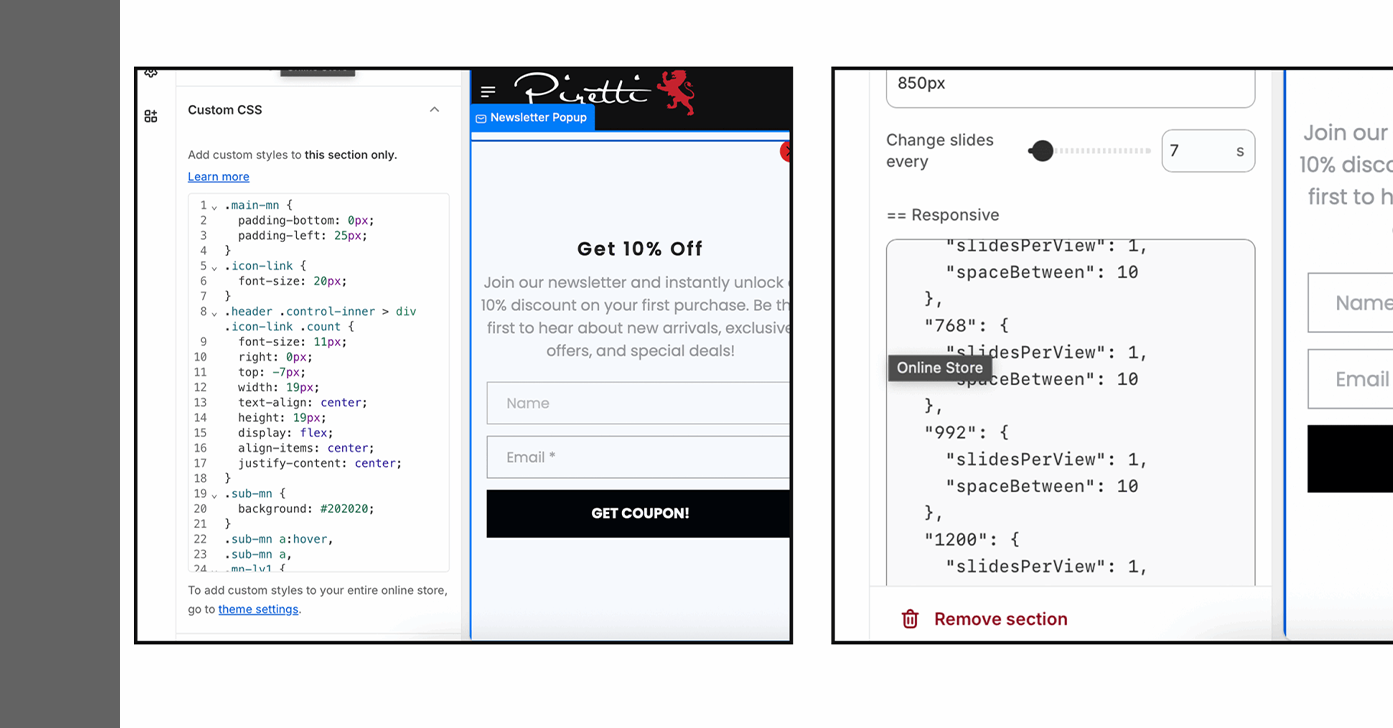
The homepage experience was carried into Shopify to preserve user familiarity and premium product presentation.
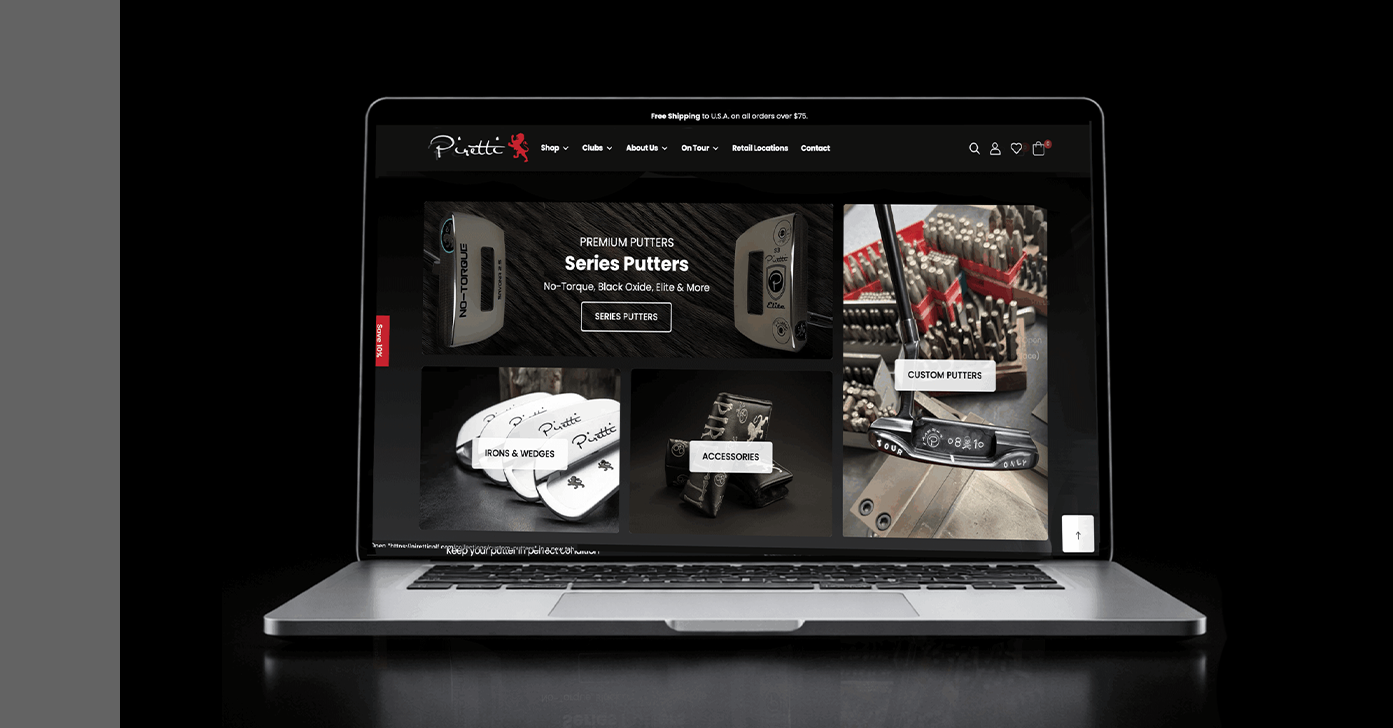
Collection and product pathways were rebuilt to support clearer product discovery and stronger ecommerce movement.
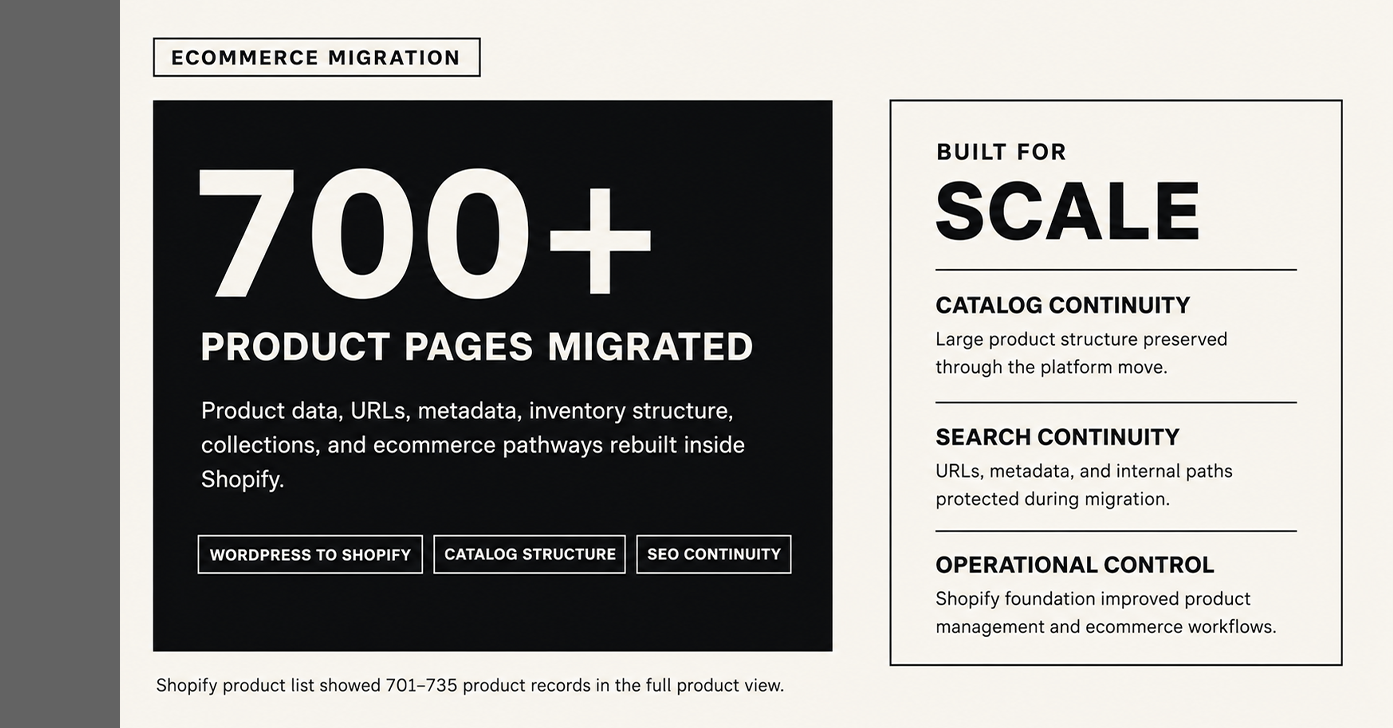
The final Shopify shop structure supported cleaner product management, stronger ecommerce control, and scalable platform growth.
Strategic Impact
Experience Preservation
Visual structure, content hierarchy, and user pathways were retained to prevent conversion disruption or brand dilution.
Technical SEO Continuity
URL architecture, metadata structure, internal linking logic, and product-page continuity were carefully handled to preserve accumulated search equity.
Large-Scale Ecommerce Control
Shopify introduced improved scalability, product management, performance stability, and marketing flexibility across a large product catalog without sacrificing rankings or crawl value.
Result
A large-scale ecommerce migration that enhanced operational capability.
The result was a large-scale ecommerce migration that enhanced operational capability while safeguarding organic visibility, ranking momentum, and user familiarity.
Have a product worth shaping a system around?
If you're building something premium and want the digital surface to match, let's talk.