
Scalable Onboarding & Lifecycle Automation System
A structured automation framework connecting signup, CRM, CMS, billing, approvals, and provisioning into a controlled lifecycle system built for scalable deployments.
CATEGORY
Automation / Lifecycle System
SCOPE
Signup, CRM, CMS, billing, approvals, provisioning automation
STACK
HubSpot, Strapi, Stripe, Slack, Trello, admin approval logic
STATUS
Live
Client Need
The client needed to design a system capable of supporting high-volume website deployments with structured approval controls and project provisioning across preferred platforms to ensure smooth customer ordering, coordinated production workflows, and centralized oversight.
The Challenge
Original Systems Were Manual And Non-Scalable
Manual project setup slowed onboarding
Every new client required hands-on coordination across multiple tools, creating a hard ceiling on how many deployments the team could absorb.
Tool fragmentation across CRM, CMS, and billing
Disconnected systems forced repeated data entry and made it difficult to maintain a single source of truth for any given project.
Risk of missed approvals
Without enforced checkpoints, projects could move forward without the sign-offs needed to protect quality and accountability.
No standardized lifecycle control
Project states were tracked informally, which made visibility, reporting, and consistent progression across clients difficult to sustain.
Strategic Context
This environment required a unified automation framework connecting CRM, CMS, billing, approval checkpoints, and deployment triggers into a single controlled workflow. To address this, the solution was intentionally designed and built across multiple phases, with each stage focused on strengthening architecture, lifecycle governance, and deployment automation — enabling this subscription-based website platform to scale without increasing administrative overhead.
Stage 1 — Architecture & Integration
Multi-Platform Workflow And Lifecycle Integration
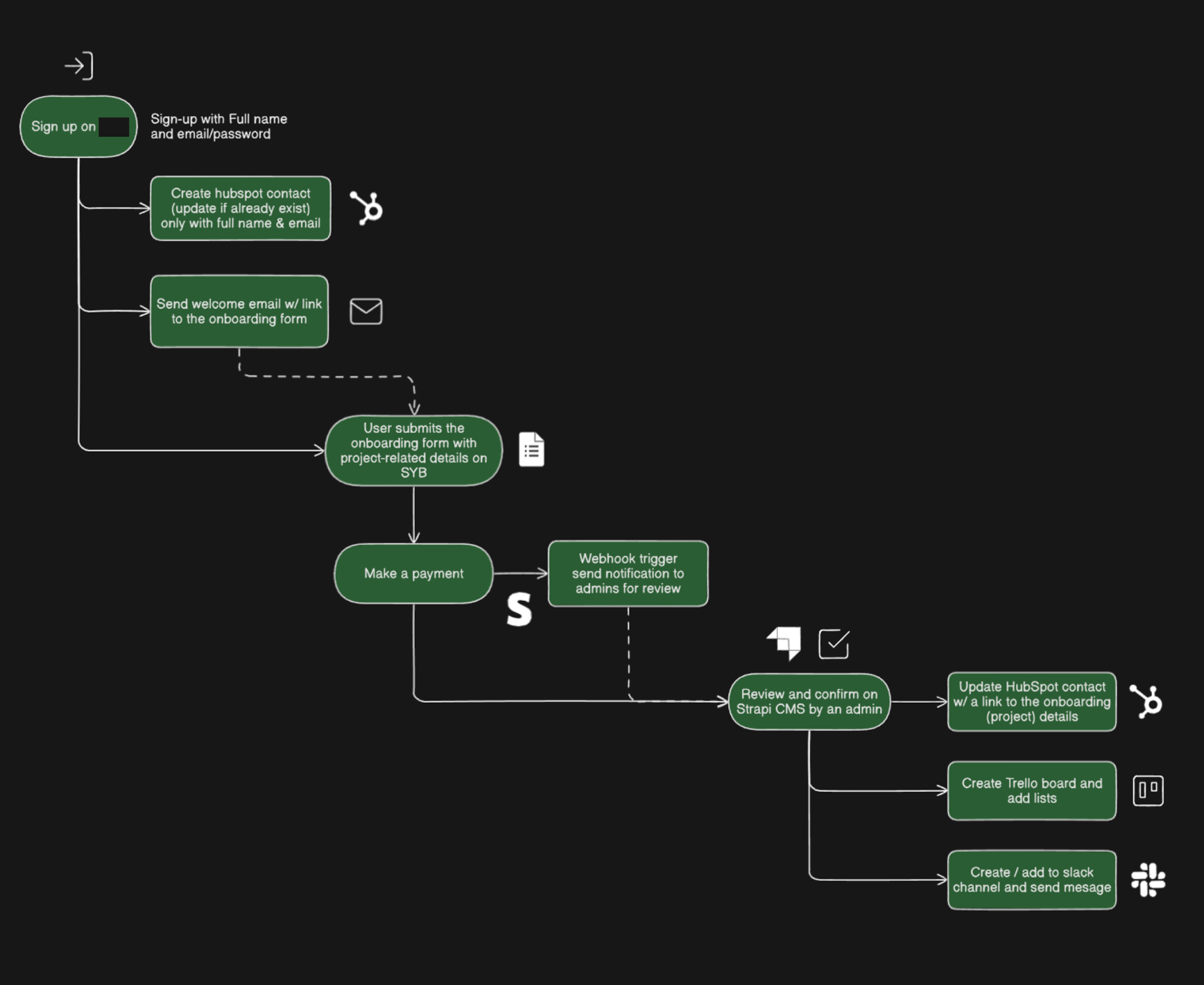
Signup → CRM → CMS → Payment → Approval → Project Provisioning.
Context
The system integrates frontend signup, HubSpot contact creation, Strapi project generation, Stripe subscription handling, Slack notifications, admin approval logic, and Trello board automation. Each action triggers the next stage automatically.
Stage 2 — Structured Intake & CRM Sync
Structured Data From Day One
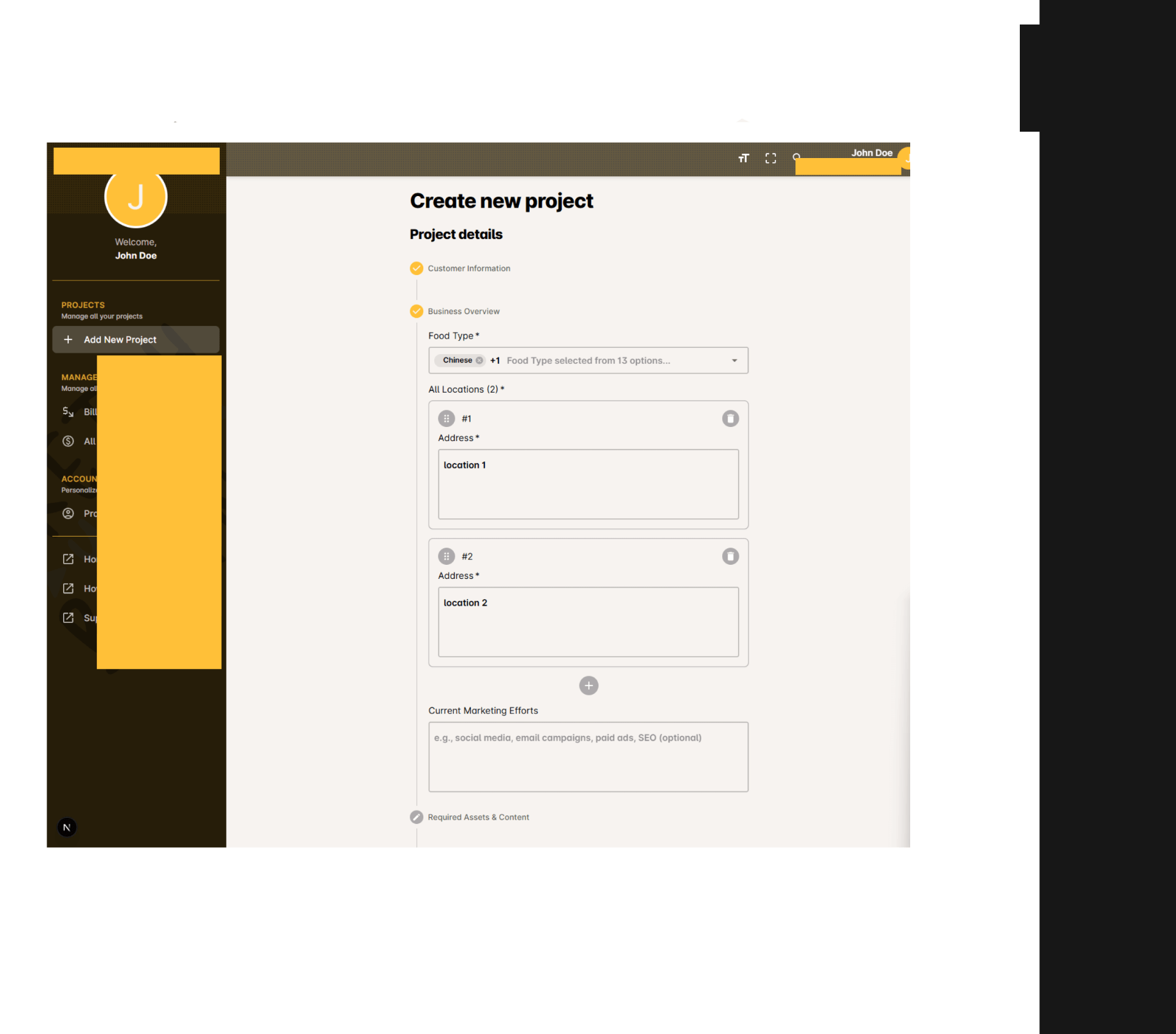
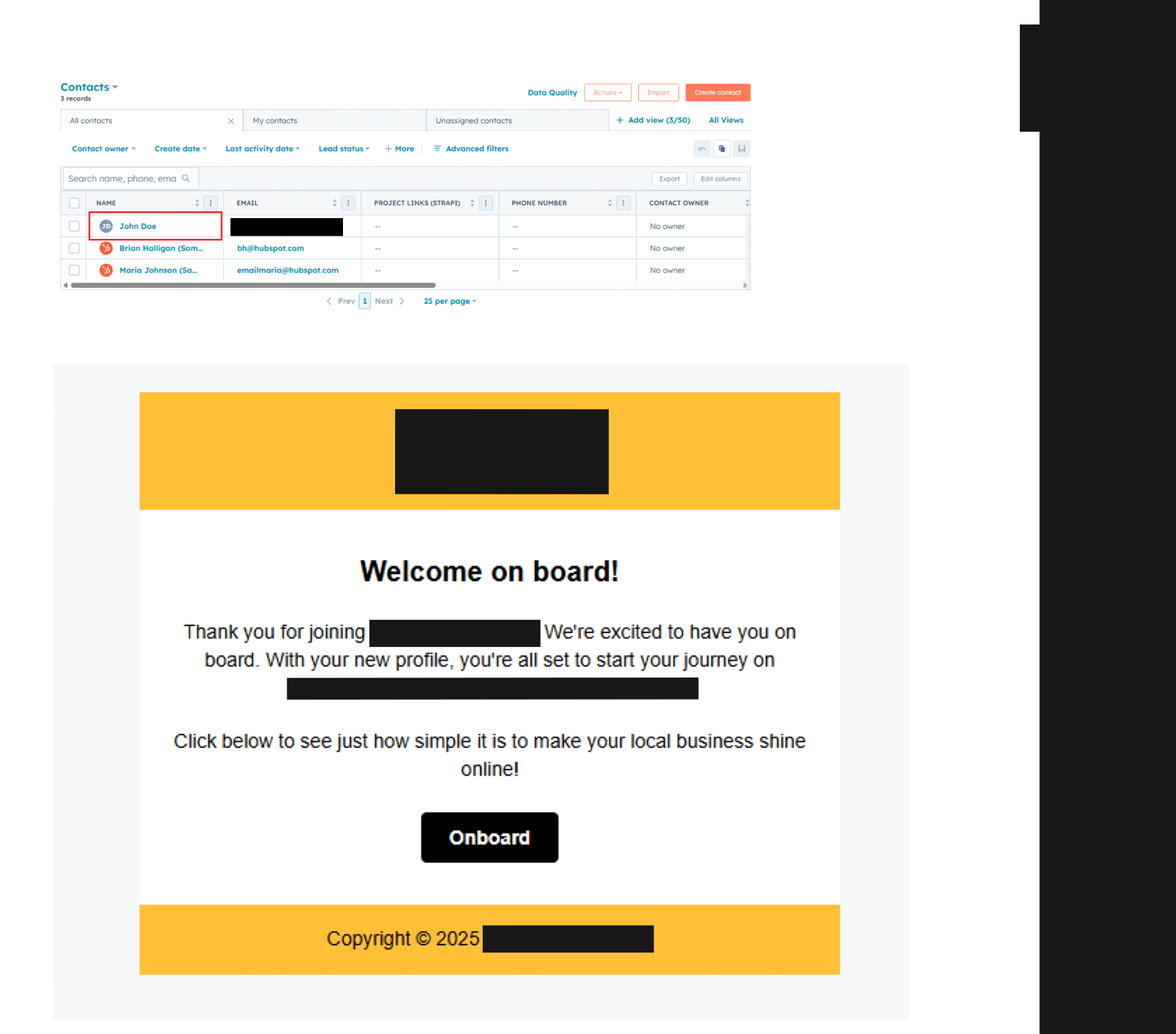
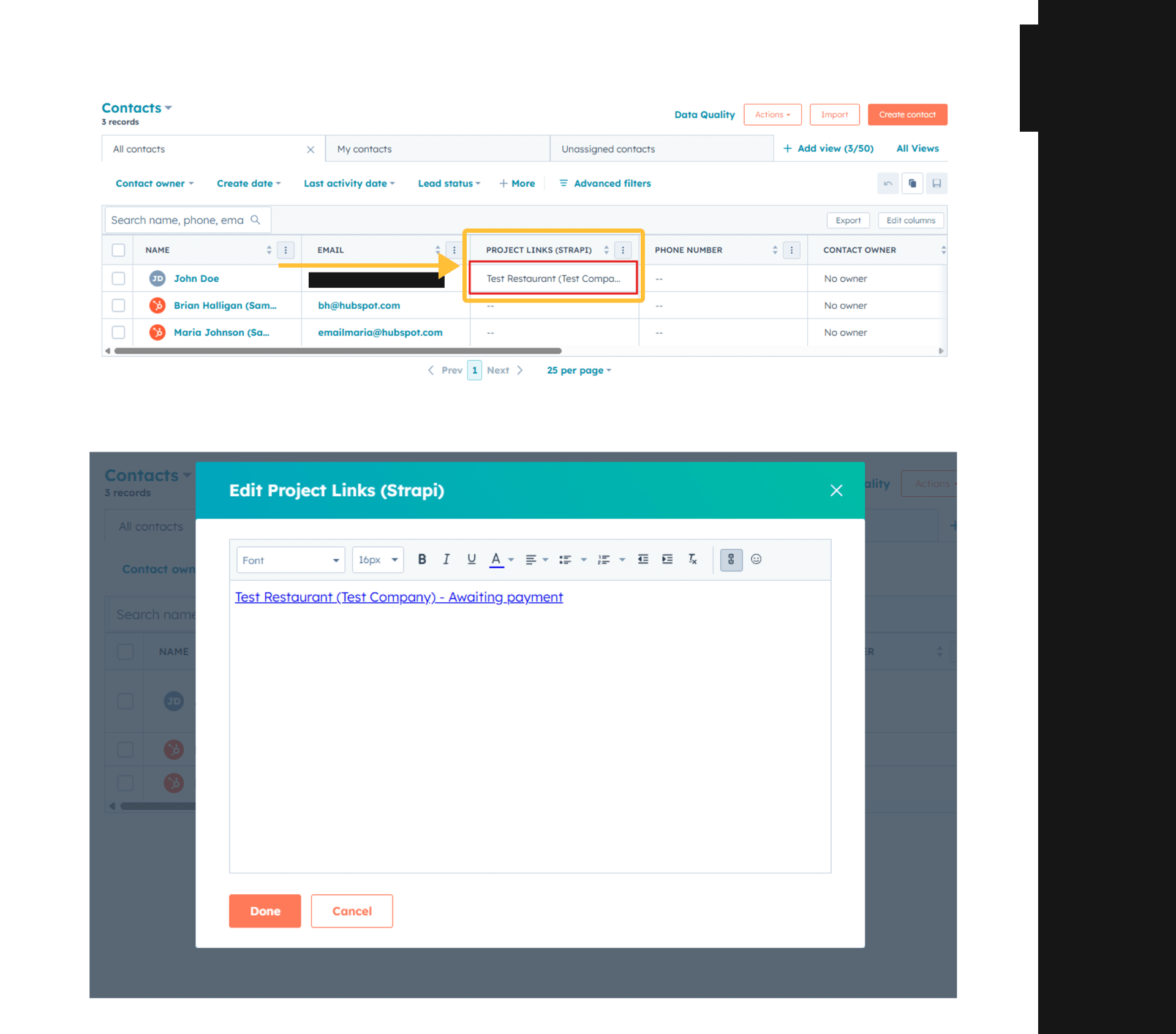
New client data flows directly into CRM and CMS with standardized lifecycle status logic.
Context
Signup forms were structured to feed clean, usable data into HubSpot while simultaneously generating a project record inside the CMS. Lifecycle states were applied automatically, ensuring every client entered the system with defined status and visibility.
Stage 3 — Payment-Gated Lifecycle Control
Automation With Governance
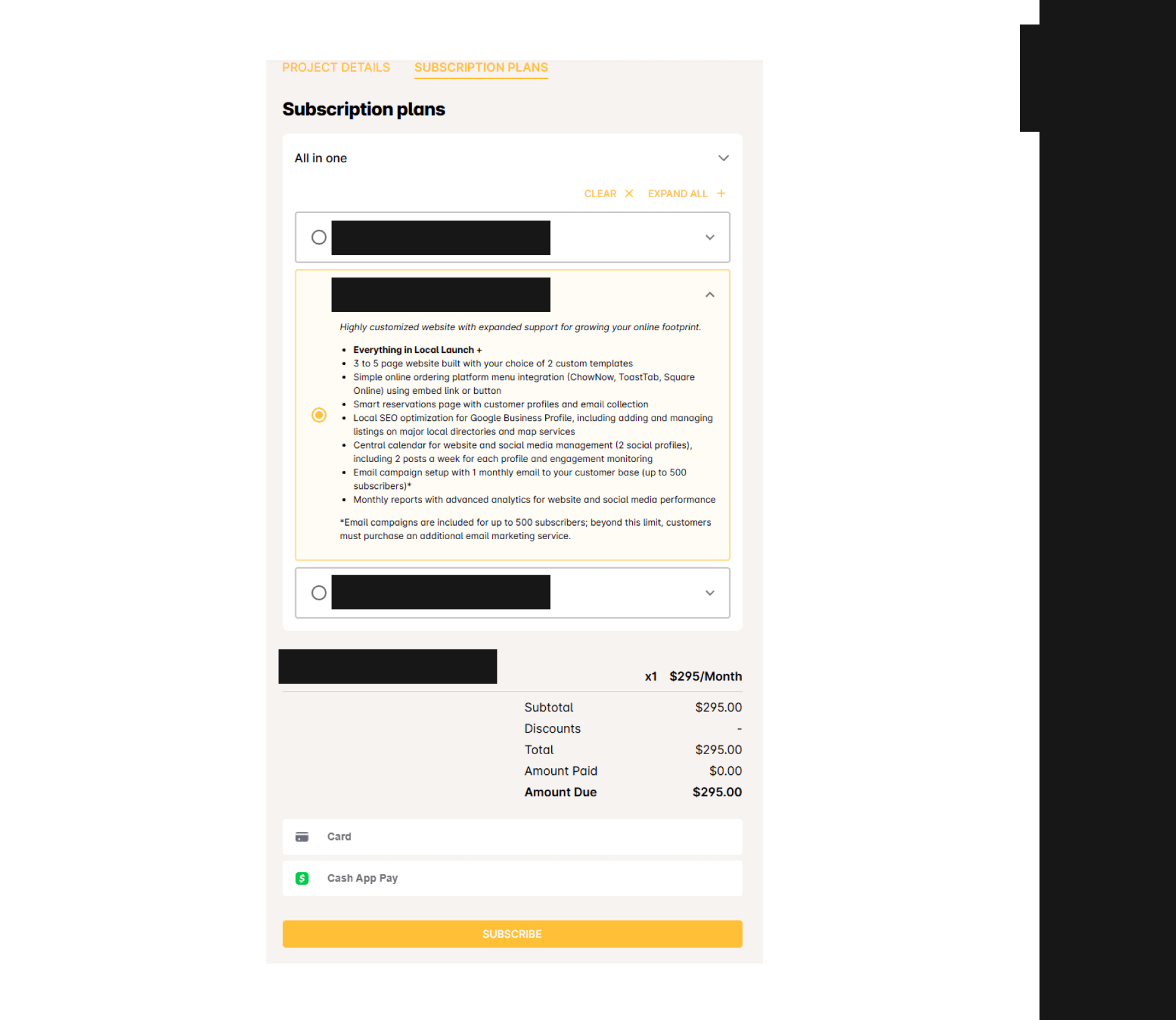
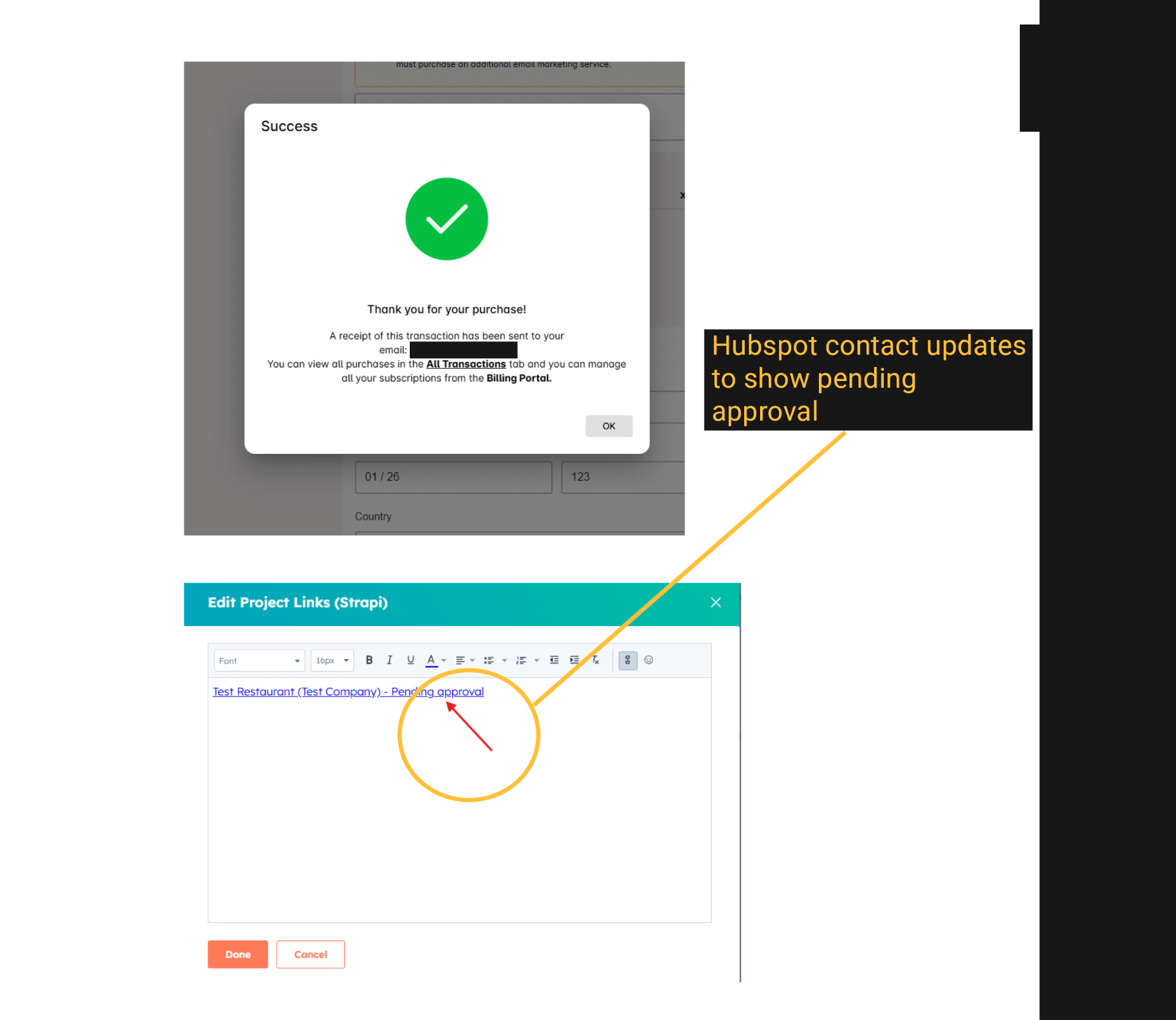
Subscription activation triggers review status and controlled approval before project provisioning.
Context
Automation was designed with governance in mind. Payment confirmation updates lifecycle status and triggers internal notifications, but project deployment does not occur until an administrative approval toggle is applied — preserving quality control.
Stage 4 — Automated Provisioning & Operational Impact
Controlled Provisioning From Approval To Production
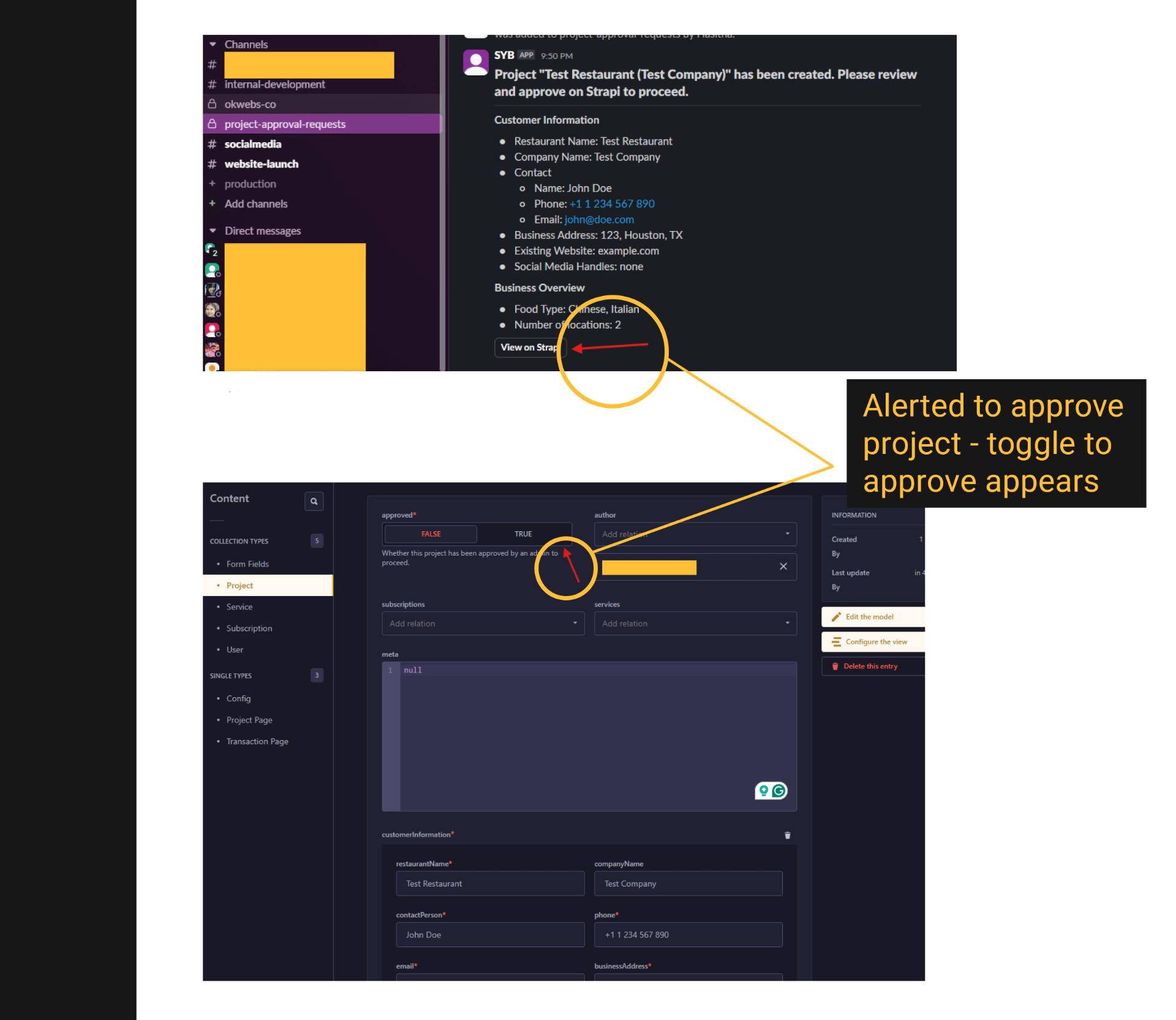
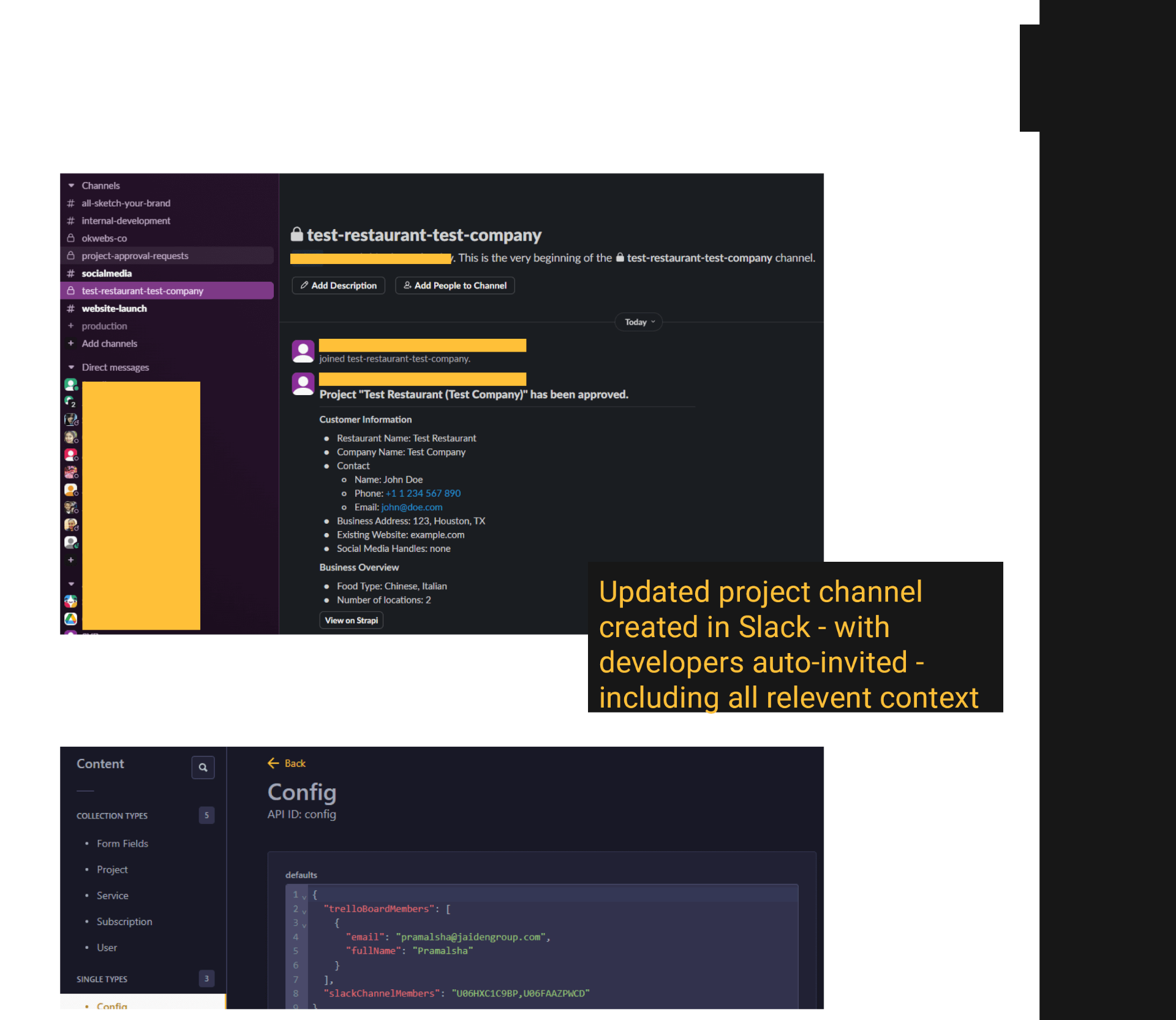
Approval triggers automated CRM updates, Trello board creation, Slack channel setup, and internal notifications, while defined lifecycle states ensure consistent tracking from signup through delivery.
Context
Once a project is approved, infrastructure deployment is fully automated. Project boards are created, communication channels are established, and team notifications are issued instantly — eliminating repetitive setup tasks. Each lifecycle stage — Signup, Payment Received, Approved, In Production — is codified within the system to ensure visibility, governance, and controlled progression.
Operational Impact
50% Cost Reduction. Accelerated Activation.
The automation framework reduced role-specific operational overhead by approximately 50%, cutting manual onboarding dependency in half while eliminating repetitive administrative setup. Preparation time per new signup was reduced by several hours, and project activation shifted from a full-day process to near-instant provisioning completed in minutes. The result is faster deployment, structured lifecycle governance, and scalable growth supported by system architecture rather than manual coordination.
~50%
Operational Overhead Reduction
Role-specific manual onboarding dependency cut in half
Hours → Minutes
Activation Time
Full-day process shifted to near-instant provisioning
4 Stages
Codified Lifecycle
Signup, Payment Received, Approved, In Production
Need a system that scales without scaling headcount?
If you're operating a subscription platform or high-volume service, let's talk about the automation framework underneath it.